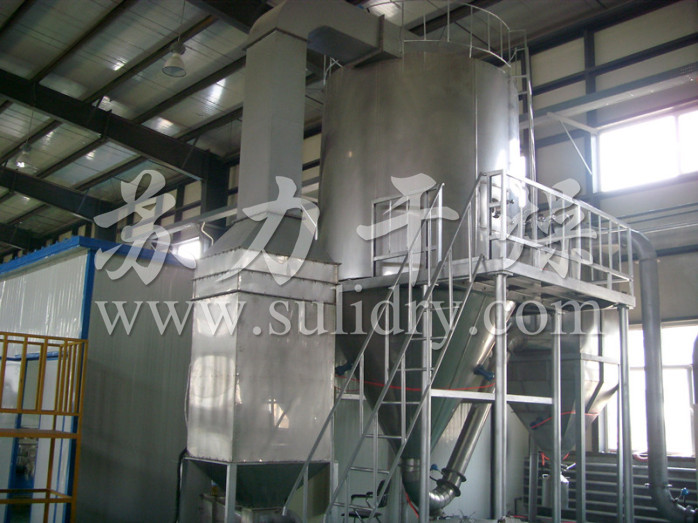
Overview of silica materials:
Silica, chemical term, pure silica colorless, solid at room temperature, insoluble in water. It is insoluble in acid, but soluble in hydrofluoric acid and hot concentrated phosphoric acid, and can work with molten alkalis. There are two kinds of crystalline silica and amorphous silica in nature. Silica is widely used in glass, water glass, ceramics, enamel, refractory materials, aerogel felts, ferrosilicon, molding sand, elemental silicon, cement, etc. In ancient times, silica was also used to make porcelain. Glazed and carcass. The general stone is mainly composed of silica and calcium carbonate.
Silica special dryer Working principle:
The air is filtered and heated into the air distributor at the top of the dryer, and the hot air enters the drying chamber in a spiral shape evenly. The liquid is sprayed into a very fine misty liquid droplet through a high-speed centrifugal atomizer at the top of the tower body, and it can be dried into a finished product in a short time by cocurrent contact with hot air. The finished product is continuously discharged from the bottom of the drying tower and the cyclone, and the exhaust gas is evacuated by the fan.
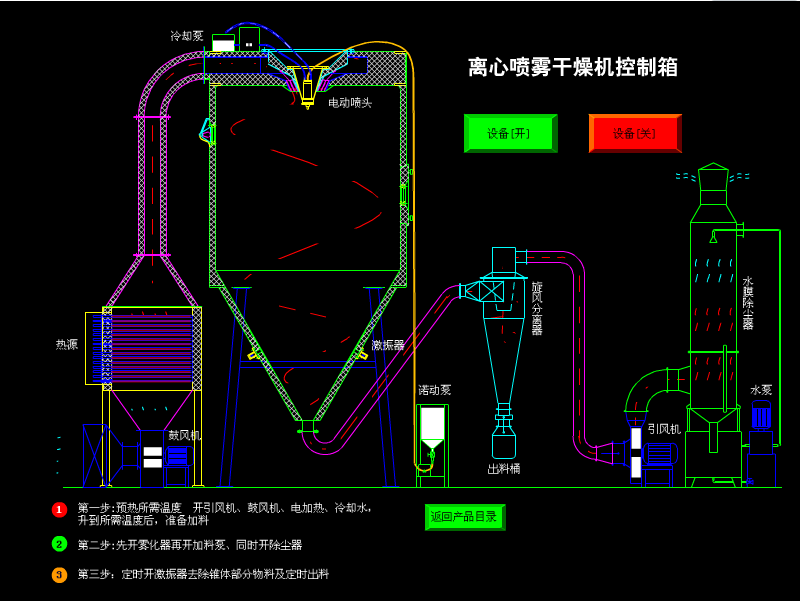 Silica special dryer Features:
1. The drying speed is fast, the surface area of the liquid is increased after atomization, and in the hot air flow, 95% & mdash; 98% of water can be evaporated in an instant. It takes only 5-15 seconds to complete the drying time and has the characteristics of instantaneous drying.
2, a special air separation device, reducing the resistance of the equipment, and effectively providing the treatment of the dryer.
3, the production process is simplified, suitable for continuous control of production, containing 40-90% of the liquid liquid, once dry into powder, reduce crushing, screening and other processes to improve product purity.
4. The material completes the drying process in a short time, adapts to the drying of the heat sensitive material, and can maintain the color, fragrance and taste of the material.
5, product dispersibility, fluidity, solubility, product size, looseness, water can be adjusted within a certain range.