Calcium citrate is poorly soluble in water (0.1 g / 100 mL, 25 ° C). Slightly hygroscopic. Heating to 100 ° C gradually loses crystal water. ADI values are not specified (FAO/WHO, 1994). As a food calcium fortifier, calcium citrate has better absorption effect than inorganic calcium.
China regulations can be used for cereals and their products, the amount of use is 8 ~ 16g / kg in milk drinks and drinking liquid is 1.8 ~ 3.6g / kg. Citric acid is a food flavor acid complexing agent, which can react with calcium oxalate of gallbladder ureteral calculi to form soluble calcium citrate to make the stone become smaller and disappear, which can promote fat decomposition and maintain the body's acid-base balance.
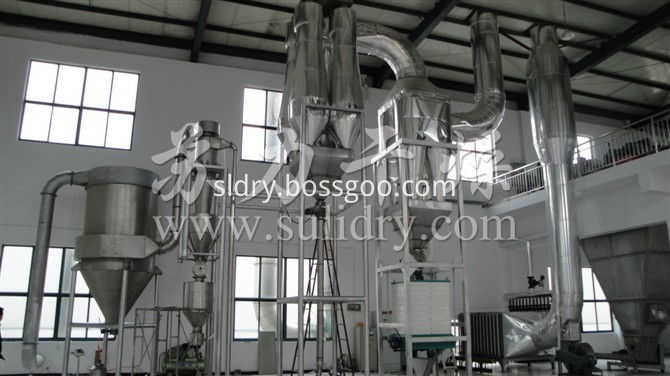
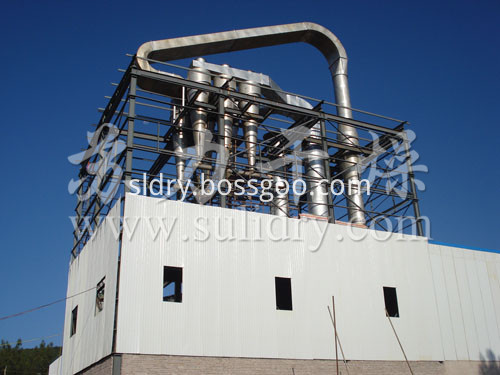
Calcium citrate special dryer Working principle:
Airflow drying removes moisture (mainly surface moisture) from easily dehydrated particles, powdered materials. In the airflow drying, the quality of the dried product is well controlled due to the short residence time of the material in the dryer. The enhanced airflow drying of our factory is composed of a set of intensifiers whose speed can be adjusted steplessly. The wet material enters the intensifier through the screw feeder and is fully mixed with the hot air flow, crushing and propelling in the fast rotating knife. Next, the material is broken into fine particles, which are moved to the outlet while drying, and then enter the drying tube under the attraction of the wind to further uniformly dry. Wet heavy particles that cannot be attracted by the wind continue to be crushed and dried until they can be sucked up by the wind into the drying tube.
Calcium citrate special dryer Main use:
This machine is especially suitable for materials with large moisture content, wet material, and can not be dried by other airflow drying methods, such as white carbon black, copolymer of vinyl acetate and vinyl chloride, cellulose acetate floc, catalyst, CMC. , CT-1 resin, wrought gypsum, electrolytic manganese dioxide, ammonium sulfonate, fluorspar, diatomaceous earth, silica gel catalyst, bone powder, high territory, potassium perchlorate sulfonamide, synthetic resin, active gluten, activity White clay, chemical filter cake, rutile type white powder, azelaic acid, copper sulfate, aluminum sulfate, sodium sulfate, calcium phosphate, phosphate esterified starch, dye, calcium citrate, slime, dough-shaped bread, rice bran, clay , clay cement, urea, bentonite, spherical clay, aluminum hydroxide, barium hydroxide, calcium lactate, food, washed high territory, cyanuric acid, gypsum paddle, lime, biological products, carbon black, calcium carbonate slurry, sludge Slag, organic chemicals aluminum stearate, iron oxide, organic fuel, corn protein feed, wet mud, mica powder, pharmaceuticals, pigments, potassium dichromate pulp, distiller's residue.
How to improve the anti-corrosion ability of the airflow dryer?
Corrosion phenomena are widespread in dry production. Corrosion is the degradation of the shape and intrinsic quality of mechanical equipment caused by electrochemical reactions. Corrosion not only seriously reduces the effective life of the equipment, but also hinders the normal operation of the equipment, and even runs, drops, leaks, etc., which poses a great threat to the safe production of enterprises. If you do not control the corrosion of the mechanical air dryer, it will bring huge economic losses and negative social impacts to the enterprise.
The design of the airflow dryer needs to consider the corrosiveness of the medium and the related flow, storage and corresponding material selection and heat treatment requirements. In the normal design process, these factors are fully considered by the equipment professional and related professional designers and propose corresponding design technical requirements. However, in the new market economy design environment in recent years, many non-chemical professional design and manufacturing units have participated in the design of airflow dryers.
Limited by various objective conditions, these newly added design units have problems such as insufficient depth and poor consideration in chemical anti-corrosion in the design work of airflow dryers, resulting in safety hazards and accidents. Enterprises need ^ professional anti-corrosion airflow dryer enterprises to improve the anti-corrosion ability of airflow dryers, and prolong the production life of airflow dryers to a large extent.